7 Tree Red Flags to Look for When Buying a Home (Even Without an Arborist)
Most tree problems don’t announce themselves—but they do leave clues
When you walk a property, most trees look fine.
That’s the challenge.
Tree issues often develop slowly, and many are not obvious unless you know what to look for.
Even without specialized training, there are certain patterns worth noticing during a home walkthrough.
These are not diagnoses.
They are simply signs that a closer look may be worthwhile.
1. A tree leaning toward the house
Not all leaning trees are a concern.
However, if a tree is noticeably leaning toward the home or a high-use area, it is worth paying attention to.
Especially if:
- The lean appears recent
- The ground looks lifted or disturbed on one side
- The tree does not align with nearby trees
This does not tell you what is wrong, but it may indicate that something is changing.
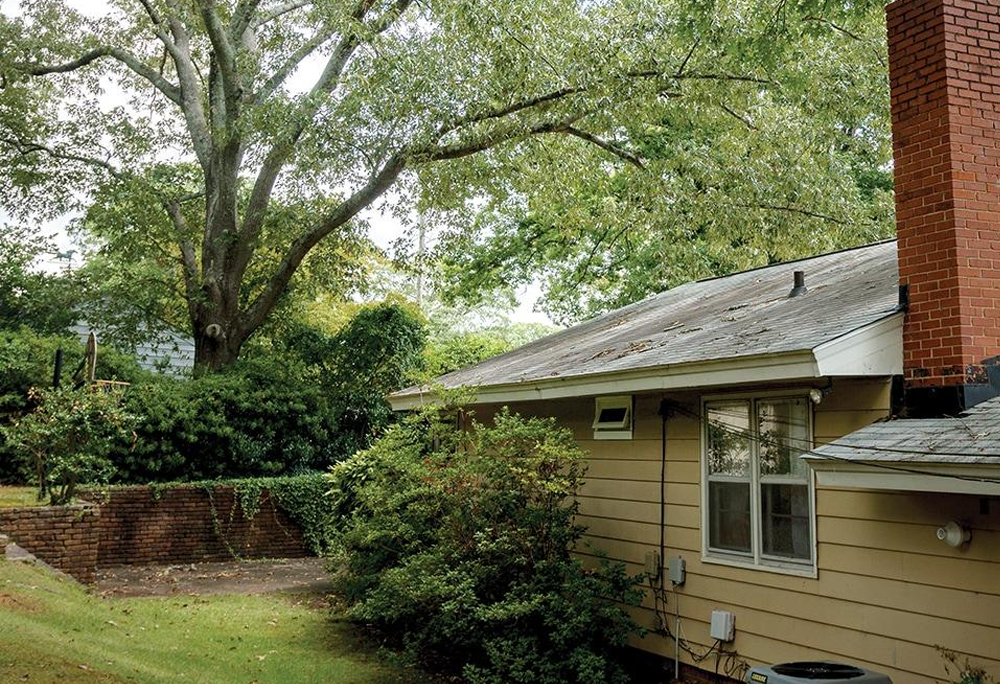
2. Large branches extending over the roof
Trees and structures often coexist, but proximity matters.
If large limbs extend directly over the roof:
- They may require ongoing maintenance
- They can influence how the roof ages over time
- They may affect how the space is used during storms
This is less about immediate concern and more about long-term ownership and planning.
3. Thinning canopy or dead branches
Look at the tree as a whole.
Does it appear full and balanced, or are there:
- Sparse areas
- Dead branches
- Uneven growth
These conditions can indicate stress.
The cause may not be obvious and can range from site conditions to natural aging.
4. Cracks, cavities, or visible damage on the trunk
The trunk is the structural core of the tree.
Visible features such as:
- Long vertical cracks
- Hollow openings (cavities)
- Areas of decay or damage
are worth noting.
These do not automatically mean failure, but they should not be ignored.
5. Mulch piled against the trunk
This is common and often overlooked.
If mulch is piled against the trunk instead of spread around the base:
- It can trap moisture
- It can affect the root collar
- Over time, it can contribute to decline
It is a small detail that can signal broader maintenance practices.
6. Exposed roots, compacted soil, or poor drainage
Look at the ground around the tree.
Are there:
- Exposed roots
- Bare or compacted soil
- Areas that remain wet or drain poorly
Tree health begins below ground.
These conditions influence how a tree grows and responds over time.
7. Trees planted very close to the house
Some trees were planted when the property was new, and the trees were small.
Now it has matured.
If a tree is very close to the structure:
- It may influence future maintenance needs
- It may limit space as it continues to grow
- It may affect how the property is used over time
This is not about right or wrong. It is about long-term compatibility.
What these observations actually mean
None of these observations is a conclusion.
They do not tell you:
- What the exact issue is
- How serious it is
- Or what, if anything, needs to be done
They simply indicate that a closer look may be warranted.
These are the same types of indicators evaluated during a Tree CheckUp® Inspection—just without the context needed to interpret them.
Why is this not as simple as it looks
Different issues can produce similar visible signs.
For example:
- A thinning canopy may relate to site conditions, insects, or natural stress
- A leaning tree may be stable or may have shifted recently
- A cavity may be minor or more significant, depending on the context
This is why tree evaluation follows a structured diagnostic process rather than quick visual assumptions.
How does this fit into buying a home?
If you notice one or more of these during a walkthrough, it does not mean something is wrong.
It means you have more information to consider before closing.
This is where a Tree CheckUp® Inspection fits in.
It takes what you are seeing and helps you understand what it actually means for ownership.
If you’re seeing one or more of these, it’s usually worth understanding before you move forward.
Related questions homebuyers often ask
If you are thinking through this, these are usually the next questions:
- Do I need a tree inspection before buying a home?
- What do trees near a house really mean for ownership?
- How do trees affect maintenance, insurance, and long-term costs?
(We are building clear answers to each of these in the Learning Center.)
The simple version
You do not need to diagnose trees when buying a home.
But noticing a few key patterns can help you decide when it is worth taking a closer look.
If you are under contract, this is the window
See What a Tree CheckUp® Inspection Costs — Before You Close
Schedule your Tree CheckUp