The Trees On That Property Could Cost You $50,000 — Or Save You That Much. Do You Know Which?
You paid for a home inspection. You paid for an appraisal. You might have even paid for a sewer scope.
But the largest living asset on the property — the one that could add $8,870 to your home's resale value, reduce your energy bill by double digits every single summer, or hand you a $10,000–$50,000 emergency tree removal bill six months after you close — you're about to buy that completely blind.
That's what most homebuyers do. And most of them have no idea.
What Nobody Tells You When You're Buying a Home With Trees
Here's the honest answer to the question you probably haven't thought to ask yet:
Trees are the only major asset on a residential property that is almost never evaluated by a qualified professional during the homebuying process.
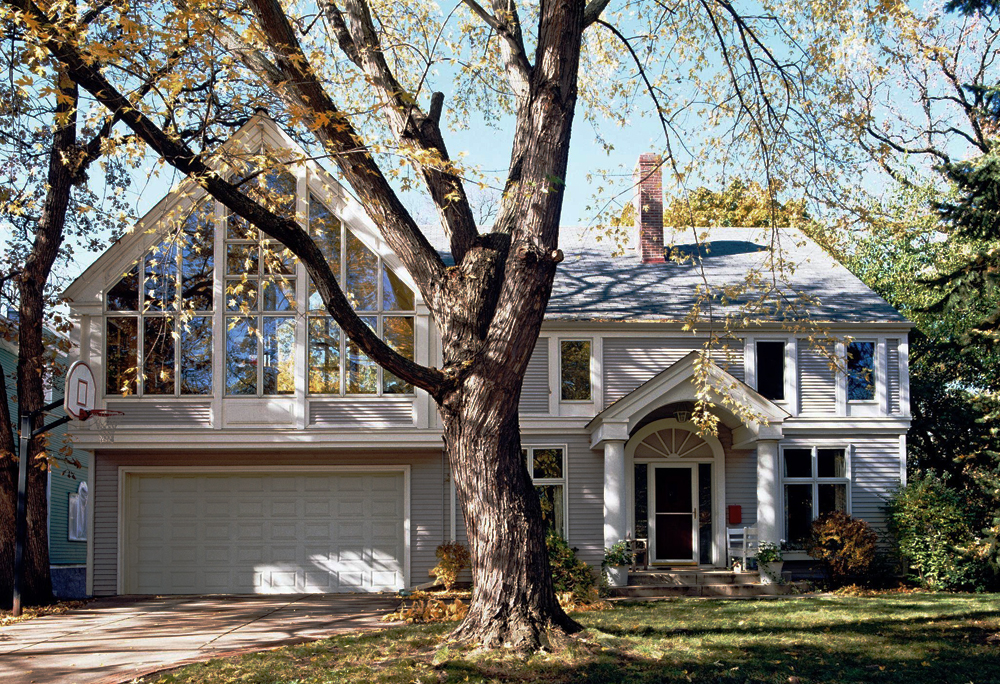
Your home inspector will walk the roof, test the outlets, flag the water heater, and check the HVAC. They are not trained to assess tree structure, root health, canopy risk, or long-term viability. The appraiser will note “mature landscaping” as a value-add and move on. Your real estate agent loves the tree-lined lot — it photographs beautifully — but can't tell you whether that 80-foot oak in the backyard is structurally sound, actively declining, or one storm away from landing on your master bedroom.
Nobody in that transaction is looking at the trees the way they should be looked at.
And that gap — between what trees are worth and how little attention they get — is exactly why a Tree CheckUp® Inspection exists.
Here's What Trees Are Actually Worth (The Research Is Unambiguous)
This isn't opinion. This is peer-reviewed data spanning two decades of study.
On residential property values: Geoffrey Donovan and David Butry of the USDA Forest Service conducted a landmark hedonic valuation study of every home sale in Portland, Oregon, cross-referenced against the city's entire street tree inventory. The result: street trees added an average of $8,870 to each home's sale price and reduced time on market by 1.7 days. Applied citywide, that premium generated a $1.35 billion increase in aggregate home values and an estimated $13–15.3 million in additional annual property tax revenue for the city. (Donovan & Butry, Landscape and Urban Planning, 2010)
On energy costs: The USDA Forest Service estimates that mature trees in American neighborhoods reduce residential energy use by an average of 7.2 percent, translating to a national savings of $7.8 billion per year. For an individual homeowner, trees strategically placed on the east and west sides of a home can cut air-conditioning costs by 20 to 30 percent in peak summer months.
On temperature: Research published in the Proceedings of the National Academy of Sciences found that when neighborhood canopy cover exceeds 40 percent, daytime temperatures average 3.5°C (6.3°F) cooler than low-canopy areas in comparable climates. (Ziter et al., PNAS, 2019)
On general property value uplift: Real estate research consistently places the value contribution of mature trees and quality landscaping at 5 to 15 percent of a home's assessed value. On a $500,000 home, that's $25,000 to $75,000 embedded in the canopy — living, growing, entirely unevaluated at the point of sale.
The trees aren't decorations. They are infrastructure. They are an asset class. And like any asset class, they can be healthy, declining, or already a liability — and the difference matters enormously to your financial outcome as a buyer.
The Risk Side Nobody Wants to Talk About (But Everybody Should)
Here is what most people in the tree industry won't say to a homebuyer:
A tree can look perfectly fine from the street and be structurally compromised at its core.
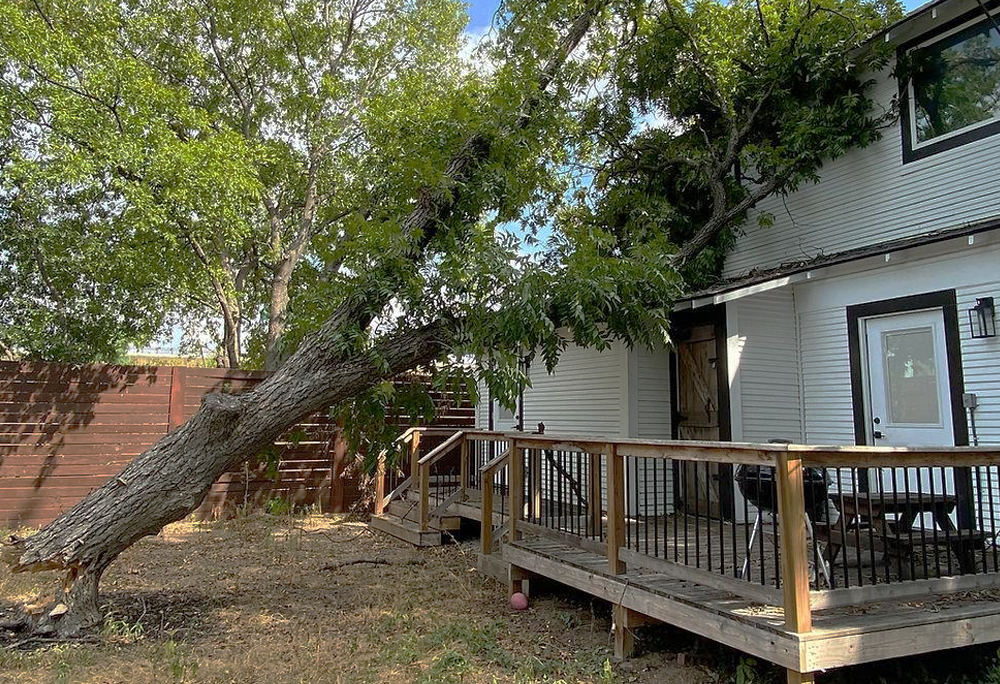
Decay in the root system isn't visible without assessment. Codominant stems — two trunks sharing a weak union — look like a beautiful, full canopy until the first major wind event. Girdling roots can be slowly strangling a $15,000 specimen tree while you're negotiating your closing costs. A tree that is 80 percent through its functional lifespan won't announce itself with a sign. And a tree that needs to come down — properly, with a certified crew, crane, and liability insurance, on a lot with a house and neighbors nearby — that is a $5,000 to $20,000 removal per tree, depending on size and access.
If there are three large, aging trees on the property in marginal condition, you may be inheriting $30,000–$60,000 in future liability, and your home inspector's report will say nothing about it.
That's the risk the current homebuying process leaves entirely unaddressed.
What a Tree CheckUp® Inspection Actually Is (And What It Isn't)
A Tree CheckUp® Inspection is not a pass/fail test. It is not someone telling you “good trees” or “bad trees.” It is not a sales pitch for tree removal services — Tree CheckUp® is 100% independent, performs no tree work, and sells no tree services. That independence is the whole point.
What it is is a professional due diligence evaluation, performed by an ISA Certified Arborist or Board Certified Master Arborist, that gives you a clear, documented picture of:
- The health and structural condition of the significant trees on the property
- Long-term planning considerations — which trees are assets to protect, which may need future investment, and which warrant closer monitoring
- Risk factors a standard home inspection will never flag
- What you're actually buying — so you can own it confidently, plan for it intelligently, and aren't blindsided after closing
Think of it the way you think of a home inspection. The home inspector doesn't guarantee the house will never need repairs. They give you the information you need to make an informed decision. A Tree CheckUp® does the exact same thing for the living infrastructure on the property — the infrastructure your home inspector is not qualified to assess and isn't looking at anyway.
The Comparison That Should Make This an Obvious Decision
| What You're Getting | What It's Worth |
| Professional assessment of assets representing 5–15% of your home's value | $25,000–$75,000+ on a $500K home |
| Identification of structural risk before it becomes your problem | Potential savings of $5,000–$60,000+ in emergency removal costs |
| Long-term maintenance and planning roadmap | Prevents reactive, emergency-priced decisions for years |
| Independent expert opinion — zero conflict of interest | Clarity a tree company estimate cannot give you |
| A documented report usable in negotiations or for insurance | Tangible, actionable deliverable |
| Energy savings intelligence — right tree placement = 20–30% AC savings | $500–$2,000+ per year in reduced utility costs |
The cost of a Tree CheckUp® Inspection is a small fraction of what even a single bad tree-related decision could cost you after closing.
Who This Is For (And Who It's Not For)
This is for you if:
- You're purchasing a home where mature trees are a defining feature of the property
- You're buying in the $350K+ range, and trees represent a meaningful share of what you're paying for
- You're planning long-term ownership and want to protect and steward what you're buying
- You've been surprised by a tree problem before and never want that to happen again
- You want insurance clarity — understanding the tree condition before closing is far better than filing a claim after
This is not a fit if:
- The property has no significant trees
- You're doing a quick flip, and long-term tree health is irrelevant to your strategy
- You're unwilling to invest a modest fee to protect a six-figure asset decision
The Question to Ask Before You Close
“Do I really need this?”
Here's the direct answer: If the property has mature trees — especially large shade trees, specimen oaks, old growth, or a heavily wooded lot — and you are planning to own that home for more than a few years, yes. Not because something is necessarily wrong. Because you don't know yet, and the cost of not knowing is vastly higher than the cost of finding out.
You hired a home inspector, not because you assumed the house was broken. You hired one because a house is a complex system with components that can fail, and you wanted an expert eye on it before you committed. Trees are complex biological systems with structural dynamics, disease vectors, root interactions, and decades-long lifecycles. They deserve the same professional scrutiny.
The trees on your next property are either a 20-year asset or a 5-year liability. A Tree CheckUp® Inspection tells you which.
What Happens Next
Booking takes about two minutes. No obligation until you see the price. The inspection is performed by a Board Certified Master Arborist. You get a professional report you can use, share with your agent, reference in negotiations, and rely on for years of ownership decisions. No tree work is sold. No upsell. Just the information you need to own your property with confidence.
Get Your Price & Book Your Evaluation → treecheckup.com/homebuyer
Sources
- Donovan, G.H. & Butry, D.T. (2010). “Trees in the City: Valuing Street Trees in Portland, Oregon.” Landscape and Urban Planning.
- USDA Forest Service Pacific Northwest Research Station — Portland Street Tree Value Study
- Ziter, C.D. et al. (2019). “Scale-dependent interactions between tree canopy cover and impervious surfaces reduce daytime urban heat during summer.” PNAS.
- npj Urban Sustainability (2025). “Increasing tree canopy lowers urban air temperature.”
- Wolf, K.L. (2005). “Business District Streetscapes, Trees and Consumer Response.” Journal of Forestry 103(8):396-400.
- McPherson, G. & Muchnick, J. (2005). “Effects of Street Tree Shade on Asphalt and Concrete Pavement Performance.” Journal of Arboriculture 31(6):303-310.
- University of Washington — Green Cities: Good Health — Local Economics